An Egyptian recipe.
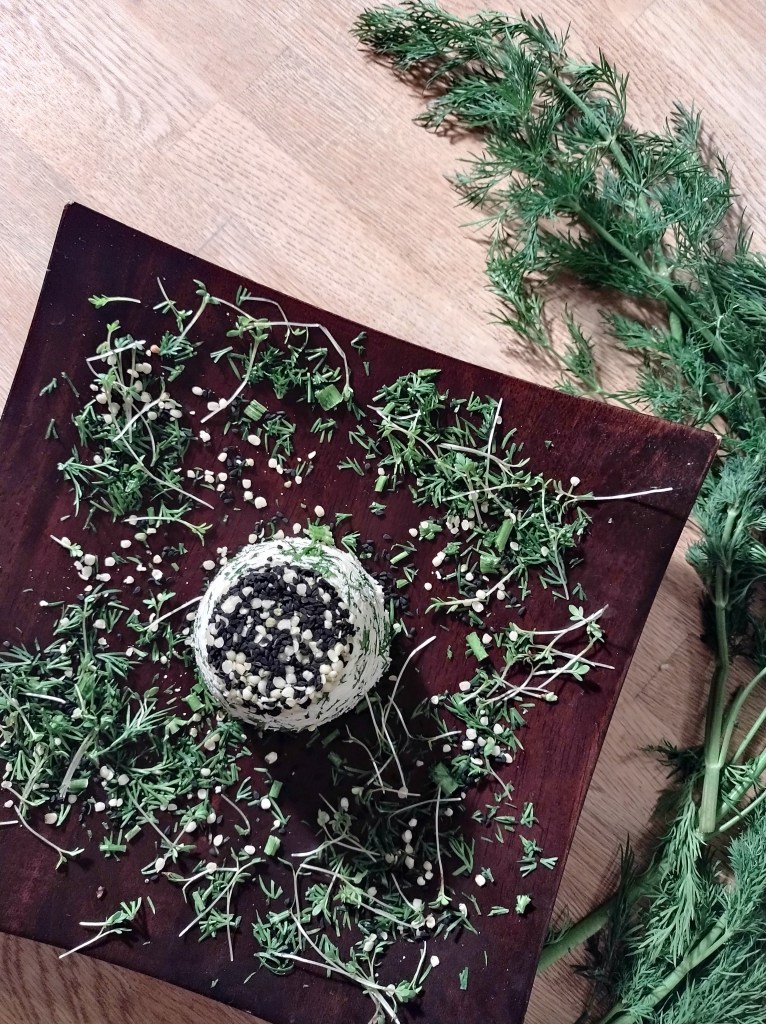
I do love cheese, every kind of cheese. When I lived in Paris some years ago, I loved to have just some cheese and baguette for dinner – my flatmate and me actually had bread and cheese most of the evenings! Now I will be able to study cheese production for some years at university, which makes me really happy since I can combine my obsession with cheese and my obsession to try every recipe I can find – that’s going to be a lot of cheese! When I told my mother about it, she laughed and said: „Did you know our ancestors moved from Switzerland to Germany as cheesemakers?“ I did not know before, but that explains a lot! Unlike my ancestors, I am no expert on cheese making but I am working to become one, especially on creating prehistorical cheese. Which brings me to the following recipe:
Some years ago, remnants of cheese were found at Saqqara in the grave of a 13th-century BC ancient Egyptian official called Ptahmes. Chemical analysis showed that the cheese was made from a mixture of cow’s milk and ewe’s or goat’s milk.
There are some depictions of how the ancient Egyptians made cheese. I read that the cheese found at Saqqara must have been more sour than what we are used to. Another scientist wrote that
„milk was churned through a goat skin to separate butter from the milk, then the residue of the churning was placed on a reed mat or in a basket and strained. The remaining product was non-fat cheese.“
From: Magda Mehdawy & Amr Hussein, The paharo’s kitchen. Recipes from ancient Egypt’s enduring food traditions, p. 41.
Therefore, I use buttermilk in my recreation of this cheese.
To make cheese, one needs rennet or an acid liquid like fruit juice or vinegar. I do not have information on what people used in ancient Egypt, but they knew wine which easily turns into vinegar when left open. So for simplicity’s sake I used vinegar. In the Bronze Age, most adults were still lactose intolerant, but by turning indigestible milk into cottage cheese, which contains less lactose, most people were able to use this nutrient-rich food.
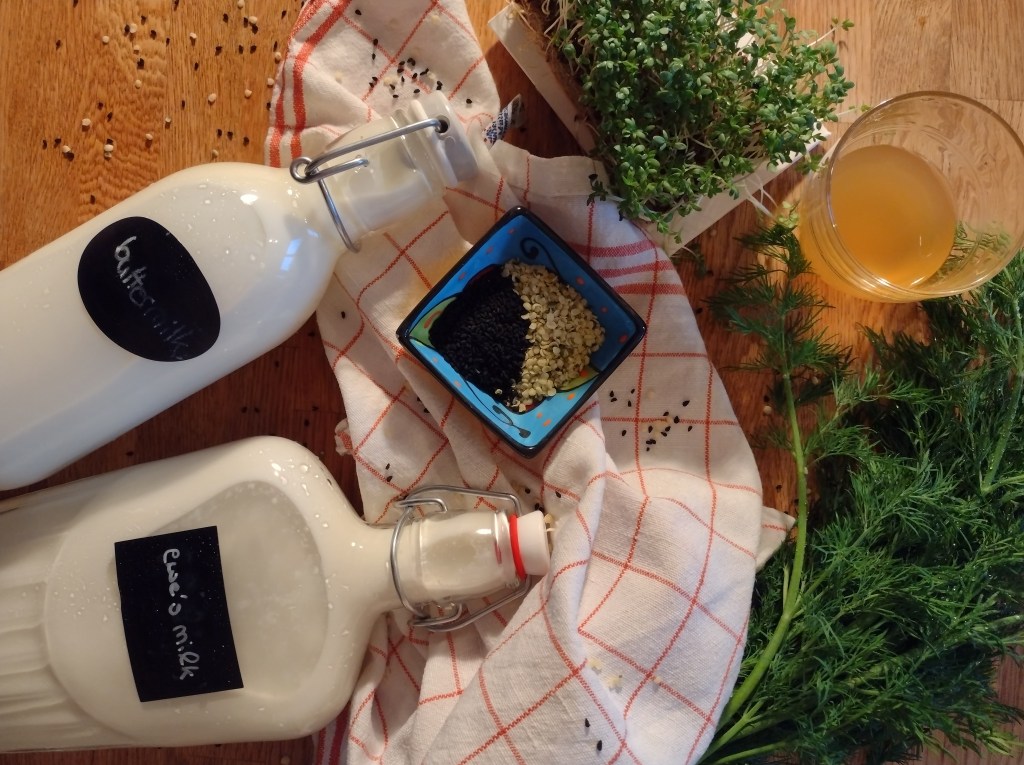
Ingredients:
- ½ l ewe‘s milk
- ½ l buttermilk
- 1 tbsp vinegar
- fresh cress
- fresh dill
- black cumin
- hempseed
- salt
Of course, you can use any herbs you like and as much as you like. In this recipe, I make a cheese with herbs that were actually detected in Bronze Age Egypt by the ERC research project FoodTransforms.
Preparation:
Slowly heat the milk and buttermilk. When the mixture is hot but not boiling, add the vinegar. The whey and curd should now separate. Sieve the curd through a strainer or a tea towel. Let the curd screen out for some 30 to 60 minutes. Do not try to hasten that process by wringing the whey out! I made this mistake first because I did not listen to people, who knew better, and my cheese was grainy and not smooth at all! Now add the herbs and bring the cheese in shape by pressing it into a small glass or bowl.

I did this many times before, but not with buttermilk or ewe’s milk, and it turned out, that these react differently from cow‘s milk. The buttermilk started to coagulate even before I added the vinegar, and the ewe’s milk seemed not to clot at all. I do not know why buttermilk and ewe’s milk behave differently but I am about to find out. One clearly needs expert knowledge for producing milk products, and that explains why some of my ancestors moved to show other people how to cook cheese. Unluckily they cannot teach me anymore but I am sure I will learn more about how to fabricate cheese! If you want to be sure the recipe works, just use cow‘s milk.
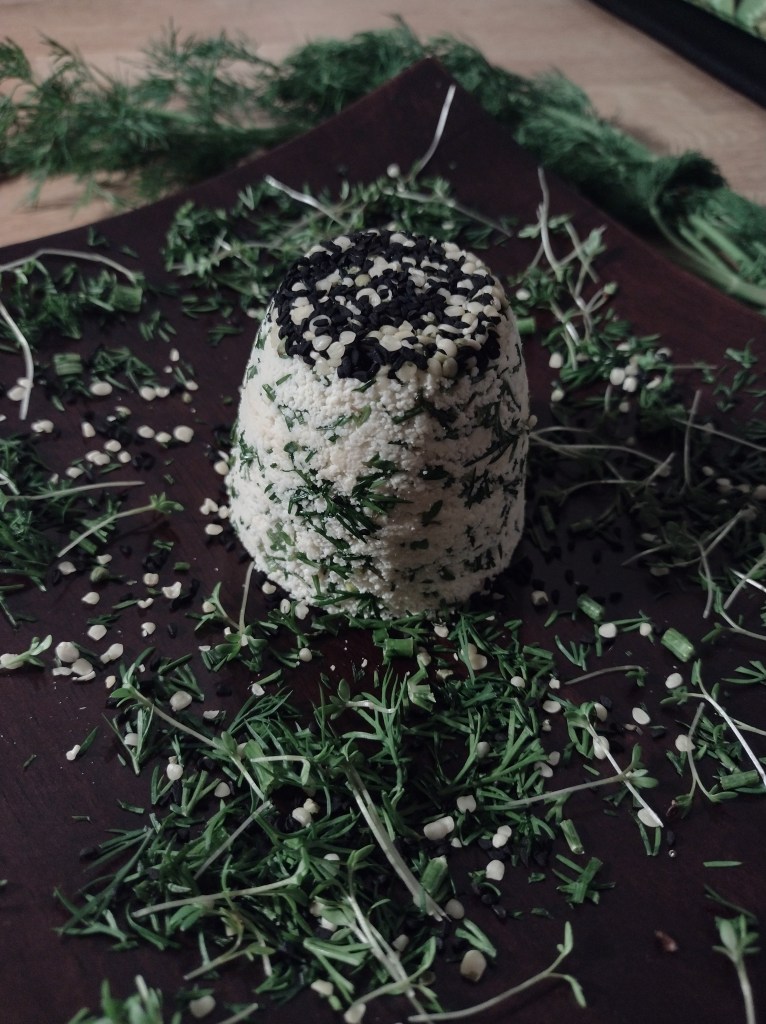
The scientists that worked on the original cheese from Saqqara said the cheese must have been sour. Mine was not, but maybe it will become sour when aging? The cheese that I made was still tasty – it reminded me of a really grainy cream cheese!
So if you want to feast like Ptahmes – or if you just want to create your own cheese – try it out! (But maybe use cow’s milk…)
Note: I’m currently researching more about cheese making in prehistory, and that recipe is absolutely not how to imagine early cheeses! But my failure is a good example of how complicated the manufacturing of milk can be and how to imagine people during the beginning of cheese making trying to figure out how to process milk to a durable and appetising food with a low lactose percentage (What I also didn’t know while developing the recipe: Most people in prehistory weren’t able to digest milk or rather the lactose within the milk!)


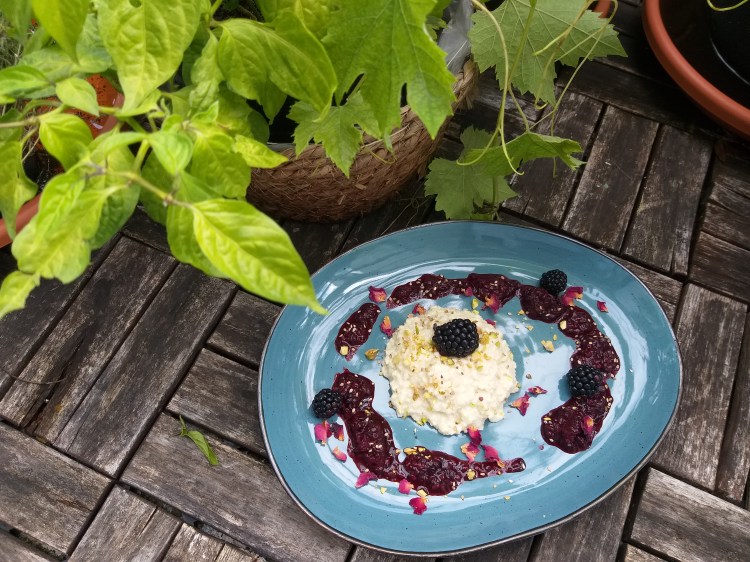






 Luise´s Bronze Age Feast